
Headrush Reverb
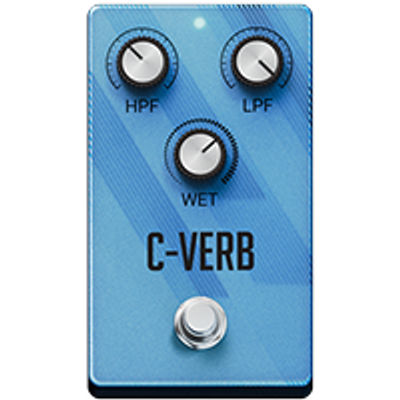
C Verb
Inspired by HeadRush® Original
The C Verb uses Impulse Response (IR) to recreate:
- Real rooms
- Famous halls
- Vintage plates
- Kinematic spaces
Main features:
- Sound ultra realistic
- Based on real samples
- Study quality
It is the most “real” reverb of the HeadRush
SOUND CHARACTER
- Extremely natural
- Detailed
- It depends on the IR file
- Perfect for recording
It does not “color” → reproduce
Control Parameters
Reverb File
IR Selection:
- Room
- Hall
- Plate
- Ambient
- Custom IR
This is the heart of the sound
High PassHz
Cuts the lows of the reverb:
- 80–120 Hz → natural
- 120–200 Hz → cleaner
Avoid dough
Low PassHz
Cut the tops:
- 4–6 kHz → warm
- 6–10 kHz → bright
Check presence
WetdB
Reverb volume:
- Negative → more discreet
- 0 dB → standard
- Positive → dominant
DrydB
Original signal volume:
- 0 dB → normal
- Negative → more effect
- Positive → more direct
Balance the mix
TailsY/N
- Y → continue
- N → immediate stop
Pro Tips
- Want cleanliness → raise High Pass
- Want hot → turn down Low Pass
- Want more effect → turn up Wet
- Want more presence → turn up Dry
Universal setup:
- High Pass: 120Hz
- Low Pass: 6 kHz
- Wet: -5 dB
- Dry: 0 dB
Perfect reverb in the mix
Study chain:
- Delay → C Verb
Ultra realistic sound
Quick Reference
- Reverb Files: IR type
- High Pass (Hz): Low cut
- Low Pass (Hz): High cut
- Wet (dB): Reverb volume
- Dry (dB): Signal volume
- Tails: Tail
Setup Examples
Natural room
IRRoom
High Pass100Hz
Low Pass7 kHz
Wet-6 dB
Dry0 dB
Realistic
Hall live
IRHall
High Pass120Hz
Low Pass6 kHz
Wet-4 dB
Dry0 dB
Large space
Cinematic environment
IRAmbient
High Pass150Hz
Low Pass5 kHz
Wet-2 dB
Dry-2 dB
Huge
Vintage plates
IRPlate
High Pass100Hz
Low Pass6 kHz
Wet-5 dB
Dry0 dB
Musical