
ReValver Cabinets
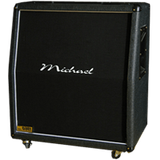
Michael 1960A 412
Inspired by Marshall® 1960A 4x12
4x12" Speaker
simulation of Marshall 1960A 4x12 (angled) one of the most used cabinets in the history of rock
SOUND CHARACTER
Classic British midrange
compact but not extreme lows
high present (can become harsh)
answer very “rock ready”
in practice: sound:
- AC/DC
- Guns N' Roses
- Foo Fighters
- 80s-90s rock
Controls
Gain (dB)
Mic volume
- ↑ more output
- ↓ more headroom
Mic Dist (inch)
CRITICAL PARAMETER
- 0–1” → aggressive
- 1–3” → balance
- >3” → more natural
- this cab -> works great between 1–2” too close = harsh
Mic Axis (On/Off)
- Hon → brighter
- OFF → warmer
- here -> OFF very used ON only for dark mixes
Low (dB)
- negative → tight
- positive → more punch
- this cab: already good bass → small boosts ok
High (dB)
- negative → less harsh
- positive → more presence
- VERY IMPORTANT -> often -1 / -3 dB is needed
Delay (ms)
Signal delay.
- 0 ms → direct
- 1–5 ms → depth
- 5 ms → phase
- useful for -> simulating double mic
Ambience (Y/N)
- OFF → close mic
- ON → simulated environment
Amb Level (dB)
- low → natural
- high → ambient
Amb Size (ms)
- 20–40 → small room
- 40–80 → study
- 80–120 → large
here: it helps a lot to avoid “boxy” sound
Suggested Microphones
This cab is:
- mid-forward
- slightly aggressive
- very “mix-ready”
- SM57 → THE Marshall sound
- MD421 (variants) → more body
- SM7 (variants) → lead smooth
- Rezio → more modern
BEST MATCH: SM57 → classic rock MD421 → fuller SM7 → lead
here they reduce harshness making the sound “bigger”
often best choice for serious recording
very detailed here with high aggressive risk
Usage: Longer distance OFF-axis
Setup Examples
CLASSIC ROCK (TOP)
MicSM57
Dist1–2”
AxisOFF
Low+1
High-2
Amblight
Pure Marshall
ROCK STUDIO
MicR121
Dist2–4”
AxisOFF
Low+1
High-1
AmbHon
more realistic
HARD ROCK
MicMD421
Dist1–2”
AxisON
Low+1
High0
LEAD
MicSM7
Dist2–3”
AxisOFF
High+1
AmbHon